
Surface finishing is not a labor-intensive procedure anymore It is now a process that is precision-driven. In the world of manufacturing today, coating quality is directly correlated with longevity, corrosion resistance and perception. As global standards become more stringent and customers expect flawless finishes, many facilities are turning to robotics for painting to achieve more control and uniformity.
A modern paint robot provides controlled motion and programmable precision applications that used to rely on the skill of the operator. Automating spray paths and angles, as well as speed, removes many of the irregularities that can lead to uneven film construction or excessive material use. The result is a more predictable coating process that can provide better First Time Quality and reduced rework.
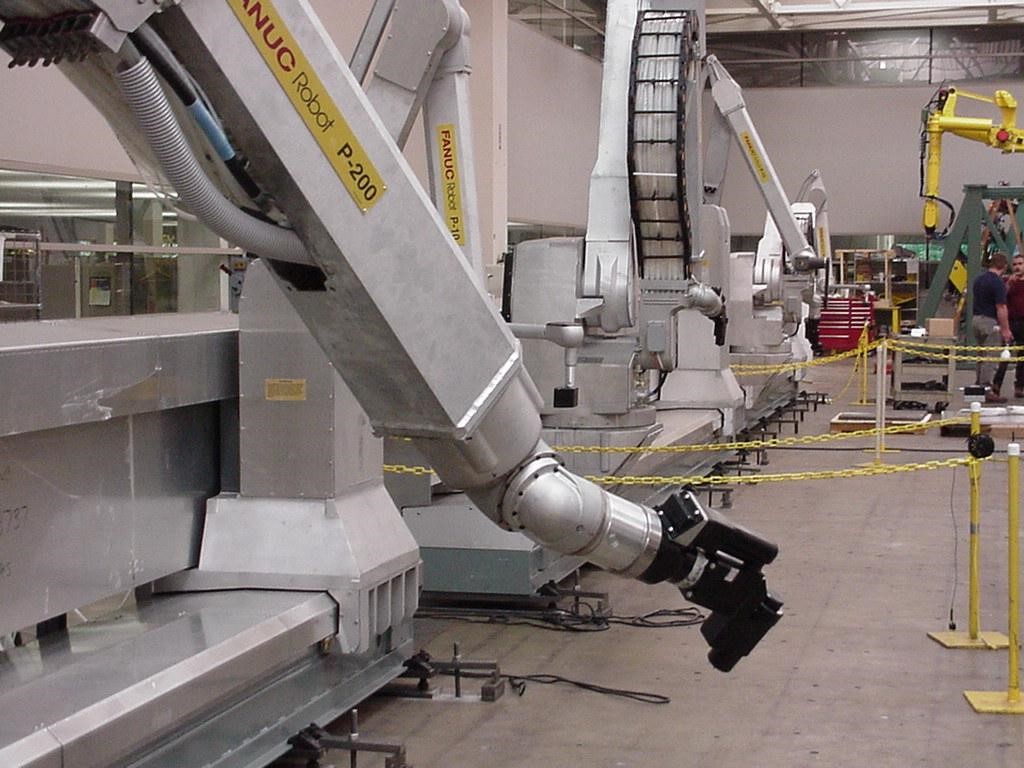
Image credit: automatedsolutions.com.au
Consistency and efficiency are key to measurable results
Manual painting usually introduces variations in thickness and coverage due to fatigue of the human or small differences in technique. Paint robots eliminate that variation as they repeat the exact motion pattern in every production step. This type of repetition guarantees a uniform surface finish, and the best distribution of materials on each part.
Advanced paint systems for robotics also improve the efficiency of transfer. Through keeping a precise distance and orientation between applicator and component, overspray can be reduced and the coating material gets to the surface of the object. The reduction of material waste will result in savings. A decrease in CO2 emissions from volatile organic compounds support the environment.
Integrated fluid handling within paint robotics ensures accurate mixing ratios for multi-component coatings. This prevents inconsistent coatings that cause damage to the finish. By combining stable flow control with adjustable parameters, manufacturers can tweak atomisation patterns and spray patterns settings in real-time.
Productivity and Safer Working Environments
One of the major benefits of using a paint robot lies in the increased efficiency. In contrast to manual processes, robotic paint cells are able to operate indefinitely with only a few interruptions. After they are programmed the paint cells provide their output in a constant manner without breaks or continuous surveillance.
It is crucial to think about safety in any facility that employs solvent-based or bi-component coatings. Atomised paint can create hazardous atmospheres, particularly when working with flammable or reactive substances. Modern paint robots have been developed to be safe even in the most challenging conditions. They reduce exposure of personnel to hazardous substances and improve workplace safety.
The technology of conveyor tracking boosts productivity by allowing automated painting of the components while they are moving. This technology expands the working envelope and keeps the production lines in good working order.
Australian Automation Expertise Supporting Industry
Access to automation partners with experience is crucial for businesses that wish to modernize finishing processes. In Australia, Automated Solutions has built a strong reputation for delivering advanced robotic integration services. The team has extensive experience in the field of automation engineering and is certified as FANUC robotic integration specialists. They help businesses implement robotic paint solutions tailored to their needs.
Automated Solutions helps manufacturers evaluate their processes and develop robotic paint cells by combining experience from industry with technical expertise. By combining collaborative design with simulations and integration of systems, businesses can understand the anticipated performance improvement before installing.
It’s not just an issue of automatization. It’s about tangible improvements in efficiency, quality and safety. Well-engineered paint robotic systems transform surface finishing from a costly, time-consuming and insecure process into a repeatable, controlled process. Manufacturers can enhance their competitiveness by working with experts in automation that have the expertise to help their companies achieve success over the long term in an industry that is becoming more demanding.