
Before a normally functioning server fails completely, there are usually signs of deterioration. Perhaps disk space is gradually being consumed. Memory usage may become inconsistent, backups may start failing, or applications may respond more slowly.
When employees have plenty of work and IT teams are prioritizing urgent requests, several weeks may go by before anyone detects these symptoms.
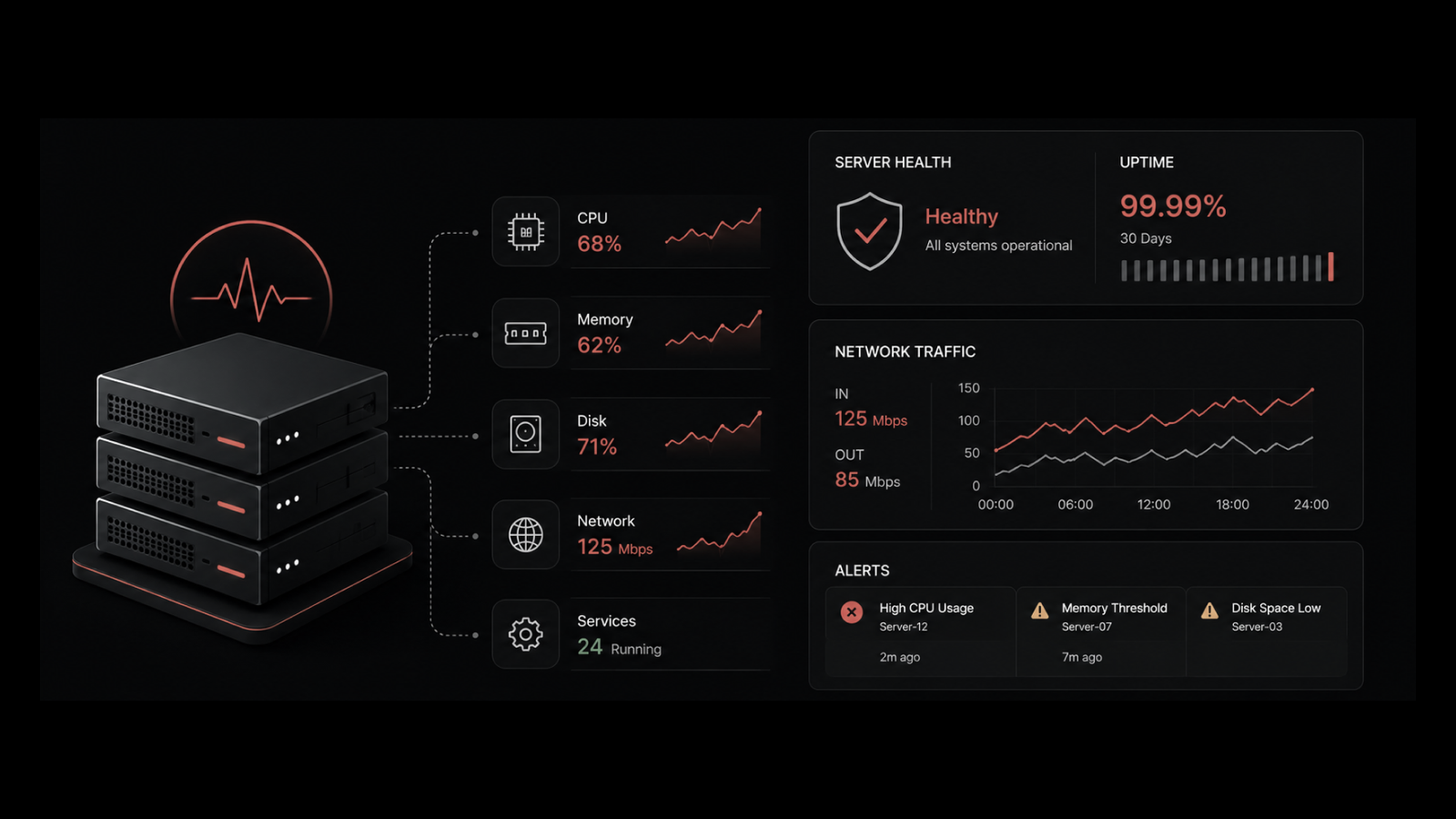
Once customers encounter a service interruption, the technical fault may have been worsening for some time. For organizations operating databases, websites, internal applications, and customer portals, detecting warning signs promptly can keep small technical issues from escalating into costly business interruptions.
Why Waiting for Failure Can Be Costly
Suppose an online shop is making preparations for its busiest sales weekend. Although the site seems to function normally, the server has a declining amount of available storage as application log growth exceeds expectations.
A surge in website traffic could coincide with the server running out of disk space if intervention comes too late. Detecting rising disk consumption, abnormal resource usage, failed services, and network connectivity issues is a practical benefit of effective server monitoring services.
Simply observing a fault does not correct it. Suitable alert thresholds must be supported by clear procedures for escalation and staff who can examine the underlying issue. A notification is useful only when someone understands the next steps.
Maintenance Is More Than Installing Updates
Control panels, operating systems, application services, and databases require ongoing attention. Appropriate maintenance windows are important when reviewing and deploying security fixes. Configuration changes should be documented, and performance patterns need to be examined before capacity becomes a problem.
Reliable server management services bring these responsibilities together rather than treating them as unrelated technical tasks. Overlooking compatibility with applications before installing an update can introduce new faults. Experienced administrators evaluate dependencies, prepare modifications, and prepare recovery options before making potentially disruptive modifications. It is equally important when overseeing backup processes. Even if a backup reports success, data restoration is not necessarily assured. To confirm that recovery processes are functional, carry out periodic restoration tests.
Different Servers, Different Responsibilities
A dedicated server supporting an e-commerce platform has distinct operating needs from a development environment hosted in the cloud.
Administering Linux machines, virtual private servers, Windows systems, and hybrid infrastructure calls for approaches suited to each environment. When selecting server managed services, businesses should consider whether support fits their operating systems, applications, security requirements, and anticipated workloads.
For organizations operating multiple cloud instances, support may be necessary to maintain consistent configurations and manage resource utilization. A business relying on older applications may require extra care to compatibility and controlled updates. A maintenance schedule suitable for one environment will not necessarily meet the needs of all environments.
What Happens After an Alert Matters Most
When a live production service stops responding, the response should go beyond a restart of the affected process. Technicians should focus on identifying the immediate issue, recovering service when feasible, and investigating the incident’s cause.
From troubleshooting and configuration issues to performance problems, security maintenance, and ongoing administration, professional server support services can offer technical help. The objective is not to guarantee that incidents will never happen. The aim is to minimize preventable failures, strengthen preparedness for incidents, and deal with repeated vulnerabilities in operations.
A More Reliable Approach to Day-to-Day Server Operations
24/7 monitoring, maintenance, technical support, and server administration are available through Bobcares for businesses operating dedicated servers, VPS environments, hybrid systems, and cloud infrastructure.
Assisting with day-to-day operations and long-term server reliability, Bobcares works alongside internal teams and draws on over 25 years of infrastructure experience.
Business owners and IT managers should look beyond the question of whether someone can repair a server after a failure. The crucial consideration is whether there are suitable personnel, monitoring processes, maintenance practices, and recovery procedures in place before customers are affected by a failure.